Ocean spots and demand hold steady, but waves may be building
Container freight spot rates on the transpacific and Asia-Europe trades showed moderate gains this week, ...


VW: THE LAST CUT IS THE DEEPESTJBHT: GEARING UP VW: BUYING TIMER: BIG VOTE OF CONFIDENCEAAPL: BEARISH HEDGEYE AAPL: THE BEAR CASEFDX: LIFE SCIENCES ORG UNVEILEDWTC: UPS AND DOWNSWTC: ASX ANNOUNCEMENT REGARDING DSV PARTNERSHIP VW: D-DAYPLD: KEEP PUSHINGDHL: NEW AIR SERVICEDHL: GUIDANCE UPGRADE REACTION
VW: THE LAST CUT IS THE DEEPESTJBHT: GEARING UP VW: BUYING TIMER: BIG VOTE OF CONFIDENCEAAPL: BEARISH HEDGEYE AAPL: THE BEAR CASEFDX: LIFE SCIENCES ORG UNVEILEDWTC: UPS AND DOWNSWTC: ASX ANNOUNCEMENT REGARDING DSV PARTNERSHIP VW: D-DAYPLD: KEEP PUSHINGDHL: NEW AIR SERVICEDHL: GUIDANCE UPGRADE REACTION
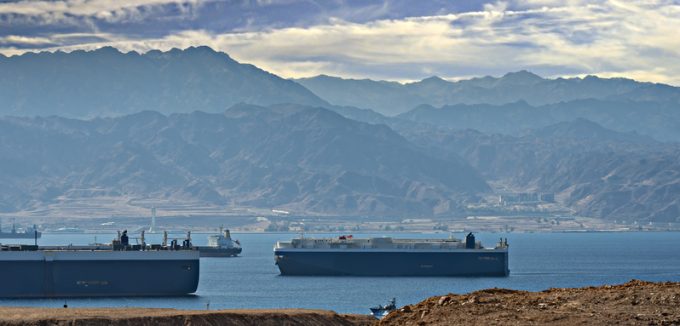
Houthi threats to widen their area of operations amount to bluster and propaganda, and “should not be taken at face value,” according to a Risk Intelligence report.
Earlier this month Houthi leader Abdul Malik Al-Houthi made a televised broadcast saying that the militia group would widen its scope of attacks on shipping into the Eastern Mediterranean, until such time as Israel and the US withdraw from Gaza and Yemen.
“We are preparing for a fourth round of escalation if the Israeli enemy and the Americans continue their intransigence,” he said on 3 May.
Shortly after this, warnings came from Maersk, in a customer circular, that “…the [Red Sea] risk zone has expanded, and attacks are reaching further offshore.”
But speaking to The Loadstar, Risk Intelligence CEO Hans Tino Hansen downplayed this risk, saying that without Iranian help, the Houthis would lack the resources to expand their sphere of influence westward.
Listen to this clip from the latest episode of The Loadstar Podcast to hear Xeneta’s Peter Sand advise on how to manage container supply chains at a time of multiple disruption:
A new Risk Intelligence report highlights that Hezbollah, an Iranian proxy in Lebanon, is well-placed to launch attacks in the East-Med, but has yet to do so.
“These capabilities have existed for a long time,” the report says, but adds that actual attacks would be geopolitically untenable for Iran, representing “a significant escalation which may have unintended consequences for Iran’s network of proxy groups as well as for Iran itself.
“The eastern part of the Mediterranean is theoretically within range of some weapons used by the Houthis,” continued the report. “Attacking moving targets at sea at such a distance, however, would be highly complex. Moreover, missiles or drones would need to avoid capable defence systems en
route.”
Of the cruise and ballistic missiles known to be in Houthi possession, a handful are capable of an 800km operational range, all of which are Iranian. The remainder are ancient Soviet and aging Chinese models, with minimal range.
Accurate targeting with much of this equipment would require coordination by sea assets within the theatre of operations, something that Houthis have had access to in the Red Sea thanks to Iranian spy ships. But it would be much more difficult to perform this role in the Med.
“Taking the less-than-accurate Houthi attacks against southern Israel in recent months into account, attacks against merchant ships even further away in the eastern Mediterranean are very unlikely to be successful,” the report concluded.

For uninterrupted access, sign in or sign up to The Daily News, Premium or The Loadstar Enterprise Plan.
Comment on this article