Lufthansa Cargo, WiseTech & IBS Software 'shape the future of air cargo'
PRESS RELEASE Lufthansa Cargo, WiseTech Global, and IBS Software shape the future of air cargo with ...

WMT: VERTICAL INTEGRATION IN LOGISTICSJBHT: HERE WE GOPG: STEADYEXPD: NEW RECORD BA: DELIVERIESMAERSK: BEAR CAMP MUSINGSCHRW: HIGHER HIGHS ON THE RADARWTC: 'ONE RECORD'HLAG: EARNINGS GUIDANCE UPGRADE AAPL: GLOBAL SMARTPHONE SHIPMENTS VW: THE IMPACT VW: MASSIVE JOB CUTS CONFIRMEDEXPD: BULLISH
WMT: VERTICAL INTEGRATION IN LOGISTICSJBHT: HERE WE GOPG: STEADYEXPD: NEW RECORD BA: DELIVERIESMAERSK: BEAR CAMP MUSINGSCHRW: HIGHER HIGHS ON THE RADARWTC: 'ONE RECORD'HLAG: EARNINGS GUIDANCE UPGRADE AAPL: GLOBAL SMARTPHONE SHIPMENTS VW: THE IMPACT VW: MASSIVE JOB CUTS CONFIRMEDEXPD: BULLISH
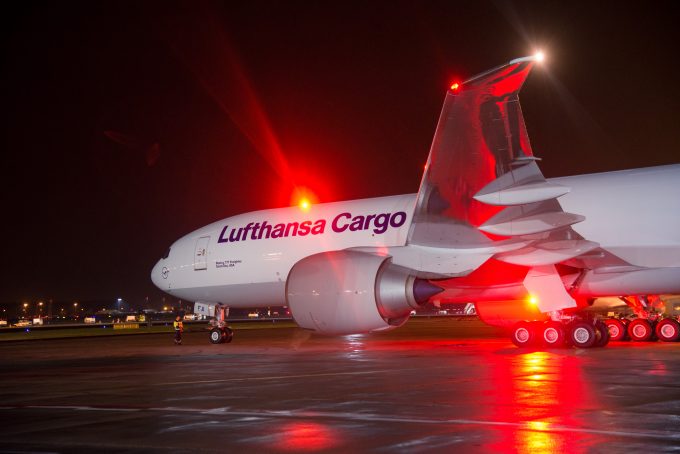
Lufthansa Cargo said it had a record set of results in the fourth quarter – but the passenger business let down overall results.
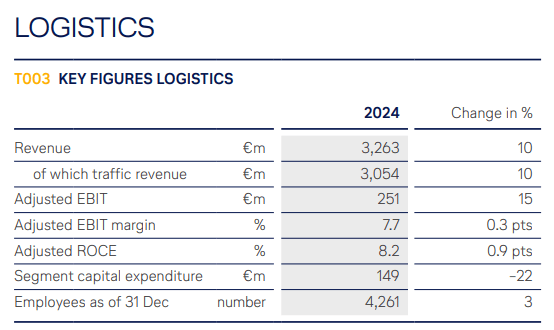
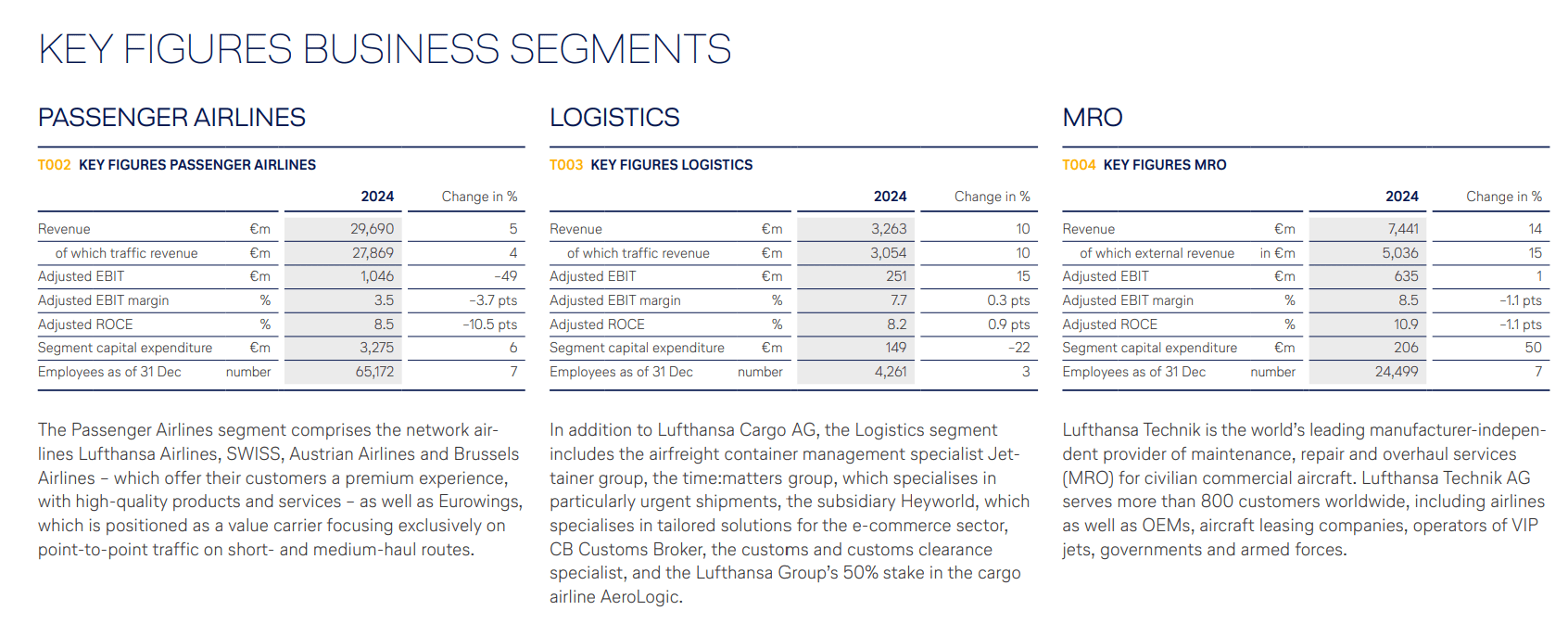
The cargo arm said revenue was up 10%, to €3.26bn, while adjusted ebit rose 15%, to €251m. Capacity rose 9%, while sales, measured in freight tonne km went up 9%.
The fourth quarter – its best outside of the Covid era – saw adjusted ebit of €199m. It said it had benefited from “persistently high cargo rates and by strong Asian business”.
The carrier put its faith in ecommerce with its “Bold Moves” strategy, seeing it develop a “comprehensive ecommerce solution in collaboration with its subsidiaries, Heyworld, CB Customs Broker, and local customs authorities, enabling customers to smoothly and compliantly import ecommerce shipments into Germany”.
It also boosted its Asian network, adding 29% capacity in the fourth quarter, with new destinations, Shenzhen and Zhengzhou, for ecommerce into Germany. It also moved into the transpacific, operating a Frankfurt-Ho Chi Minh-Los Angeles-Frankfurt service.
Traffic revenue rose in all traffic regions year on year, with Asia/Pacific registering the strongest increase. The Americas and Asia/Pacific remain Lufthansa Cargo’s main traffic regions, accounting for nearly 90% of capacity and sales.
It continues to have faith in ecommerce, despite some compliance headwinds in the sector, as both Europe and the US – as well as some Asian countries – look to challenge the tax-free, and often transparency-free, status of the packages.
But – despite well-documented problems in Germany’s automotive sector – the carrier said this year it would add automotive, healthcare, and semiconductors to its focuses.
It added: “Cross-border ecommerce shipments are the fastest-growing airfreight segment. Among the special products offered, such as the transport of live animals, valuable cargo, post, and dangerous goods, it is primarily the demand for carriage of temperature-controlled goods that is continuously increasing.”
CEO Ashwin Bhat said: “Our Bold Moves strategy proved crucial to Lufthansa Cargo’s success in 2024.
“We were able to demonstrate two things last year: our speed of innovation focused on customer needs; and our flexibility in quickly responding to market developments. Therefore, I am optimistic about 2025 – a year that will continue to be characterised by uncertainties and unpredictable events.”
Lufthansa also carried on developing its short-haul freight network, expanding its A321F routes into Munich. It has also opened a 777F destination to Brussels.
And expansion is set to continue, now that it has bought into Italy’s ITA Airways, it said.
In its annual report, Lufthansa said it was adapting its product portfolio “in line with increasingly specialised demand and responding to the changing nature of globalisation with a broader geographical focus” – and it may expand its transpacific routes. It added it had moved capacity from North America to China.
In addition to Lufthansa Cargo, its logistics segment includes Jettainer, time:matters, ecommerce platform Heyworld, CB Customs Broker, and AeroLogic, its JV with DHL.
The group’s overall results were disappointing, with revenue up 6%, to €37.58bn, but net profit down 18%, at €1.38bn. Ebit fell 35%, to €1.73bn.
Lufthansa explained: “At the start of the year, our group’s flight operations in particular were affected by strikes staged by various employee groups within the Lufthansa group as well as employees of system partners. In the second quarter in particular, market-wide capacity growth increased price pressure for the passenger airlines, causing yields to fall. This was particularly so for our Asian traffic.
“In the third quarter, persistently high cost inflation and the effect of irregularities in flight operations ultimately had a negative impact on earnings. In addition, the ongoing delays in the delivery of new aircraft adversely affected our result for the year as a whole – not only due to higher maintenance and fuel costs and the need for a larger number of reserve aircraft, but also because this deprived us of a potential source of revenue growth.”
Lufthansa has 242 aircraft on order, including seven 777-8Fs, which should join the fleet by 2030.
For uninterrupted access, sign in or sign up to The Daily News, Premium or The Loadstar Enterprise Plan.

Comment on this article