Mexico's rail freight booming, yet USMCA review could slam the brakes
The target is China



AMZN: AI WAVESDHL: THE FRENCH CONNECTIONJBHT: MIND THE SPREADMAERSK: GAUGE THE UPSIDE DSV: UP AND DOWNCHRW: FIRST OF ITS KINDMFT: TAKING PROFIT DSV: LAYOFFS IN THE USATSLA: ON THE MENDCHRW: 'SPECIAL AWARD' TIMECHRW: NEW HIGH-END TARGET ON THE STREETDHL: ABOUT JET FUEL SUPPLY
AMZN: AI WAVESDHL: THE FRENCH CONNECTIONJBHT: MIND THE SPREADMAERSK: GAUGE THE UPSIDE DSV: UP AND DOWNCHRW: FIRST OF ITS KINDMFT: TAKING PROFIT DSV: LAYOFFS IN THE USATSLA: ON THE MENDCHRW: 'SPECIAL AWARD' TIMECHRW: NEW HIGH-END TARGET ON THE STREETDHL: ABOUT JET FUEL SUPPLY
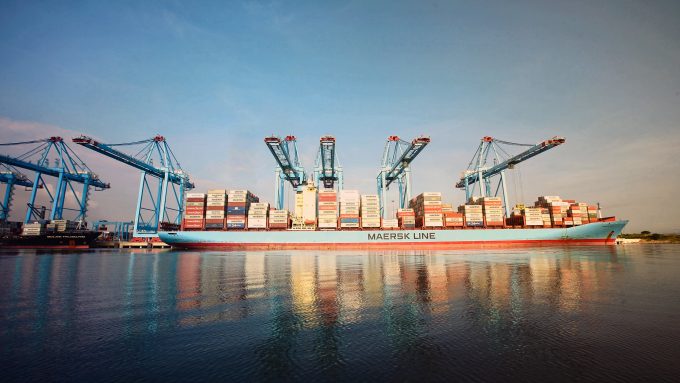
Investment is pouring into Lazaro Cardenas, Mexico’s second-largest Pacific container gateway, but questions remain if this will bring relief to truckers.
Data for October show the port continues to lag Mexico’s other major gateways in processing trucks.
According to T21 Business Intelligence, dwell time for trucks at Lazaro Cardenas in October, based on 983 visits measured at the port, averaged 13 hours and 45 minutes. This is significantly more than the national average that month, of 10 hours, 57 minutes.
Manzanillo, the nation’s largest container port, and Veracruz, the biggest on the east coast, had average truck dwell times of nine hours and two minutes and nine hours and 13 minutes, respectively.
Across all three segments measured – handling times, customs processing, and waiting time – Lazaro Cardenas fared worse than the other major gateways. Handling took on average two hours, 53 minutes, compared with the national average of two hours, 19 minutes; and whereas Manzanillo (four hours, 28 minutes) and Veracruz (four hours, 26 minutes) were below the national average of five hours, 22 minutes for customs processing, the same process took six hours, 46 minutes at Lazaro Cardenas.
Waiting times at the port averaged five hours, 12 minutes – significantly longer than the national average of three hours, 15 minutes, while at Manzanillo and Veracruz, truckers were idle less than three hours.
Although designated a major gateway for auto traffic, Lazaro Cardenas also fared poorly in this segment. Between July and September, it was the port where it took longest for auto imports to leave. Manzanillo had the longest times in May and June, owing to a customs strike that lasted four weeks.
With more than 24.6m tons handled, throughput over the first 10 months was a record for Lazaro Cardenas, container traffic rising 9% year on year, vessel calls up 5%, and auto shipments increased 7%.
Nevertheless the poor performance reflected in long truck dwell times is at odds with the fact the port, which opened in 2013, is comparatively modern and better planned than its peers, and it has deeper navigation channels and available land to expand.
Indeed, money is pouring into the port to expand capacity – MX$14bn ($770m), more than half from the public sector. Part of this is under the federal government’s MX$57bn Plan Michoacan, to bolster economic growth in the region. Besides expansion of the port’s box terminals, this calls for new cold chain infrastructure, improved road and rail access, and modernisation of the customs compound.
The port authority acquired nearby La Palma Island to develop a logistics complex there, which is expected to open in 2030.
APM Terminals, which deployed a new electric post-panamax ship-to-shore crane, with a lift capacity of 100 tonnes, in October, is in the process of expanding its facility to a capacity of 2.2m teu.
The question is, can these efforts bring about significant improvements in the port’s efficiency? Earlier this year, John Sanchez, commercial director of APMT Lazaro Cardenas, warned that investments needed to be accompanied by more agile customs operations and coordinated processes, as regulatory processes were slow and fragmented.
Customs in particular is viewed as a stumbling block. According to trucker reports, often only two of the port’s seven customs booths are staffed, owing to personnel shortages.
In September, truckers staged protests at the port to complain about waiting times of up to 36 hours, the customs bottleneck, and the scarce access to rest areas and bathrooms, as well as the port’s failure to deliver on previous commitments to address these problems.
Check out today’s News in Brief, on rates, routes and WiseTech!

For uninterrupted access, sign in or sign up to The Daily News, Premium or The Loadstar Enterprise Plan.
Comment on this article