Mærsk-Ferrero supply chain partnership - hard questions remain unanswered
The key lesson here



CHRW: FIRST OF ITS KINDMFT: TAKING PROFIT DSV: LAYOFFS IN THE USATSLA: ON THE MENDCHRW: 'SPECIAL AWARD' TIMECHRW: NEW HIGH-END TARGET ON THE STREETDHL: ABOUT JET FUEL SUPPLYFDX: DISAPPOINTING DEBUT FOR LTL UNITWTC: MOMENTUMDHL: FLYING HIGH
CHRW: FIRST OF ITS KINDMFT: TAKING PROFIT DSV: LAYOFFS IN THE USATSLA: ON THE MENDCHRW: 'SPECIAL AWARD' TIMECHRW: NEW HIGH-END TARGET ON THE STREETDHL: ABOUT JET FUEL SUPPLYFDX: DISAPPOINTING DEBUT FOR LTL UNITWTC: MOMENTUMDHL: FLYING HIGH
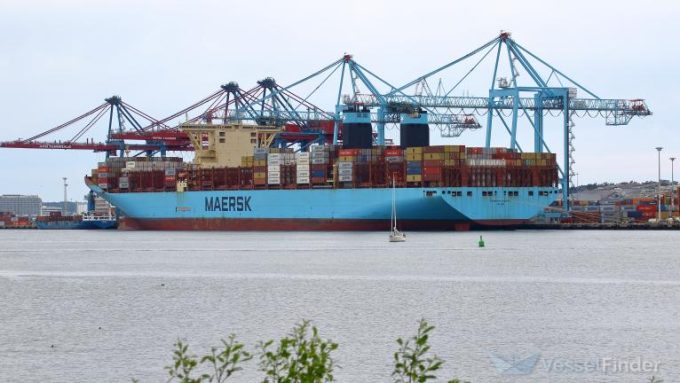
Maersk’s bullish full-year profit expectation has surprised stakeholders amid the heightened market uncertainty – but there may be a reason the carrier is so confident.
In its Q2 earnings results report last week, the Danish carrier raised its EBITDA projection to between $8bn and $9.5bn, from $6bn-$9bn.
Maersk cited “more resilient market demand outside of North America” as one reason and said it expected global container market growth to be between 2% and 4%, updating its previous estimate of -1% to +4%.
But James Hookham, director of the Global Shipper’s Forum, told The Loadstar: “I am curious that they can be so confident so soon after the final tariff rates were confirmed.
“They may be whistling to keep their spirits (and share price) up,” he added.
Mr Hookham explained that most shippers were likely to be “still a long way from knowing what demand they will have for the coming year”, especially in countries “hit with unexpectedly high tariffs that they found out about less than a week ago”.
He continued: “I know the US only accounts for 15% of all container shipping, but look at the knock-on disruptions when the US ports went on strike briefly last year, or the summer of 2020 when delays at a US port (LA/Long Beach) were blamed by the shipping industry for the global misery that was peak season 2021 and for sending spot rates into orbit.
“Experience suggests US trades set the core demand for deployed capacity in container shipping, and it has not been possible to just carve them out of the network and isolate their effects in the way that Maersk is now implying.”
And Philip Damas, head of supply chain advisors at Drewry, told The Loadstar that, based on the maritime consultant‘s latest forecasts, “it will be hard for Maersk and other carriers to grow in the second half of this year, as North American traffic volumes are expected to decline and global volumes will remain flat overall”.
Indeed, maritime analyst Sea-Intelligence has warned of a possible “boom-bust cycle” this year, the “whiplash effect” of which could “pose a significant risk to the container shipping industry”.
“With US port volumes, the boom of the first four months was immediately followed by a bust, with volumes contracting sharply by 4.1% year on year in May and 8.2% in June. To put this into context, the average May-June growth from 2015-2019 was 4%, while the 2025 contraction is 7.5%.
“This rapid reversal shows that payback from the front-loading is a reality,” urged Sea-Intelligence.
Peter Sand, chief analyst at Xeneta, told The Loadstar Maerk’s adjusted demand forecast had “literally removed the entire downside of the former announced expectations”.
“We don’t see final tariff rates in many places yet. Uncertainty still relies to a large extent on the US trade wars – most importantly against China – and the essential exports of containerised goods in Asia,” he said.
But Mr Sand pointed out that “profits for a company like Maersk will hinge mostly on European bound tradelanes… and spot and long-term [rates] are still elevated and largely profitable, due to the ongoing Red Sea crisis”.
This was backed up by CEO of maritime consultancy Vespucci Maritime Lars Jensen, who told The Loadstar: “In their [Maersk’s] original outlook they expected a baseline where the Red Sea only impacted the market in H1 25,” he explained
“That would set the scene for a market downturn in H2. But they now expect the Red Sea crisis to continue for rest of 2025. Seems correct as the attack, and sinking, of two vessels by the Houthis in July means we are a long way away from a resolution,” added Mr Jensen.
Listen to the recent News in Brief Podcast to get up to speed on the latest supply-chain news!

For uninterrupted access, sign in or sign up to The Daily News, Premium or The Loadstar Enterprise Plan.
Comment on this article