Maersk returns West Africa service to the Red Sea as Suez comeback gathers pace
Maersk has announced that it is returning a third service to the Red Sea routing, ...

JBHT: NEW HIGHS EVERYWHEREPLD: STRONG DELIVERYJBHT: FAIR-VALUE CONSENSUS ESTIMATE AT ALL-TIME HIGH KNIN: AI TECH ADVANTAGEPLD: TRADING UPDATE ON THE WAY KNIN: UPSIDEJBHT: STRONG TRADING UPDATE DSV: EVERY LITTLE HELPSJBHT: CEO REMARKS WMT: VERTICAL INTEGRATION IN LOGISTICS
JBHT: NEW HIGHS EVERYWHEREPLD: STRONG DELIVERYJBHT: FAIR-VALUE CONSENSUS ESTIMATE AT ALL-TIME HIGH KNIN: AI TECH ADVANTAGEPLD: TRADING UPDATE ON THE WAY KNIN: UPSIDEJBHT: STRONG TRADING UPDATE DSV: EVERY LITTLE HELPSJBHT: CEO REMARKS WMT: VERTICAL INTEGRATION IN LOGISTICS
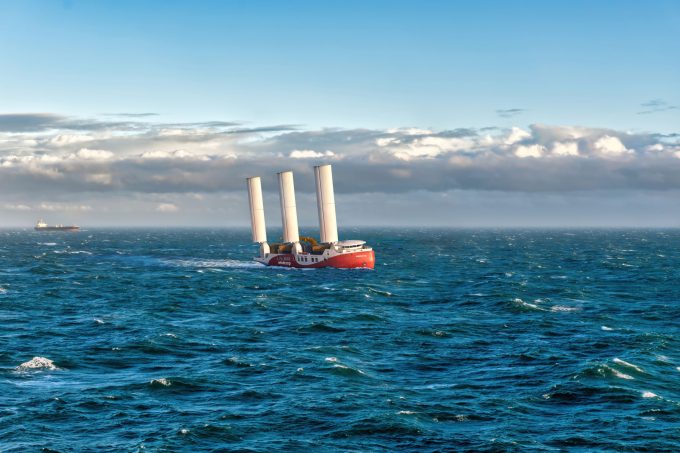
A French shipowner co-operative has launched a new sail-powered container/lift-on-lift-off (lo-lo) vessel, the first top-loading ship to incorporate sail power.
The as-yet unnamed 91.3-metre, 210 teu vessel will be constructed by RMK Shipyard, the same yard that built French compatriot sail-powered ro-ro, Neoliner Origin.
Based on a design by consortium incorporating RMK, the vessel will be owned and operated by the newly formed French shipowning co-operative, Windcoop. and deployed on a route between Madagascar and Europe.
Windcoop’s novel co-operative ownership model comprises 1,600 members and 10 prospective customers, raising €6.8m over two years, the required equity for the vessel’s construction. Based on an SCIC, a type of French multi-stakeholder co-operative model, Windcoop incorporates individuals, shippers, customers and committed investors. Members include chocolate maker Valrhona, vanilla producer Prova, co-operative Ethiquable and the coffee group Cafés Richard.
“Signing with RMK Marine is a crucial milestone for Windcoop. After four years of development, we are finally taking decisive steps toward realising what was once considered an audacious dream,” said Matthieu Brunet, Windcoop Chairman. “Thanks to the enthusiastic support of all our members and partners, this vision is on the brink of becoming reality.”
The vessel will be the first container vessel to combine sails with conventional ship-to-shore (STS) top-loading.
Featuring an asymmetrical sail layout, the vessel is designed to be loaded by STS cranes in Marseille; but also features an onboard container crane, allowing it to unload cargo at quaysides in the ports of Tamatave, Diego Suarez and Majunga whihc are not equipped with gantry cranes.
It is very challenging to design a container vessel that could make wing, rotor, or suction sails work.
In 2023, effort was made by Japanese shipping line ONE, to put containerised sails on vessels, loaded on top of the stack and offloaded like a normal container.
But a spokesperson from prominent sail-maker bound4blue told The Loadstar this is not a direction the company will be taking in future, despite accelerating uptake and commercial success in other ship segments like bulk carriers and general cargo vessels.
“In small container ships… this approach could make sense in terms of size … but the main issue is that these vessels operate in short-sea shipping, making very short trips and carrying out frequent loading and unloading operations. As a result, the fuel savings achieved on each short journey are outweighed by the costs of loading and unloading the container.”
For uninterrupted access, sign in or sign up to The Daily News, Premium or The Loadstar Enterprise Plan.
Comment on this article