Carriers back to 'price-gouging' on ocean trades – 'they can't help themselves'
Asia-Europe shippers on long-term contracts are beginning to feel the effects of an early peak ...



AMZN: AI WAVESDHL: THE FRENCH CONNECTIONJBHT: MIND THE SPREADMAERSK: GAUGE THE UPSIDE DSV: UP AND DOWNCHRW: FIRST OF ITS KINDMFT: TAKING PROFIT DSV: LAYOFFS IN THE USATSLA: ON THE MENDCHRW: 'SPECIAL AWARD' TIMECHRW: NEW HIGH-END TARGET ON THE STREETDHL: ABOUT JET FUEL SUPPLY
AMZN: AI WAVESDHL: THE FRENCH CONNECTIONJBHT: MIND THE SPREADMAERSK: GAUGE THE UPSIDE DSV: UP AND DOWNCHRW: FIRST OF ITS KINDMFT: TAKING PROFIT DSV: LAYOFFS IN THE USATSLA: ON THE MENDCHRW: 'SPECIAL AWARD' TIMECHRW: NEW HIGH-END TARGET ON THE STREETDHL: ABOUT JET FUEL SUPPLY
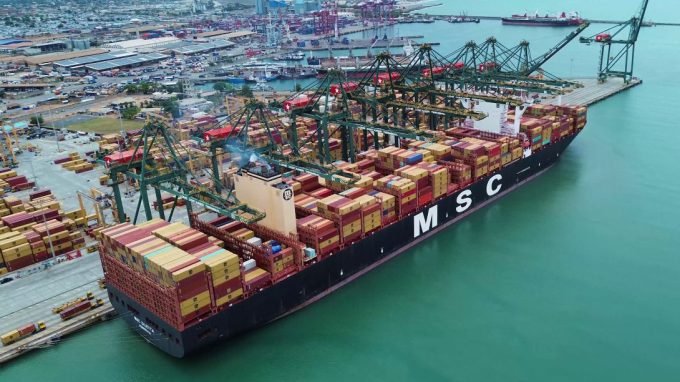
More than half of the new containership capacity added to global markets in the past 12 months is deployed on just two trades: Asia-Europe; and Africa-related routes.
According to new research from Alphaliner, 1.84m teu was added to the global fleet between May 2025 and last month, representing a 5.7% increase on the previous 12-month period, and taking the containership total to 33.9m teu.

Source: Alphaliner
The Asia-Europe trade was the main beneficiary of the additional capacity, with the three main alliances, MSC, and the few niche carriers that continue to run independent services seeing 667,400 teu added over the last 12 months, representing an increase of 8.5%.
This means around a quarter of global capacity is deployed from the Far East to North Europe and the Mediterranean.
“After an already impressive 11.7% increase between May 2024 and 2025, some carriers were still short of tonnage to staff all the Far East-Europe loops which are deviating around the Cape of Good Hope due to the Red Sea crisis,” reported Alphaliner.
“With 25% of the global fleet now trading there, it is by far the largest shipping lane for the liner fleet. Three years ago, the percentage stood at 20.8%. It might further increase as long as carriers cannot sail through the Strait of Hormuz.
“Asian exports to the Arab Gulf can reach their destination after a Far East-Med trip through transhipment on liner services to the Red Sea and using land-bridges from Red Sea ports to Upper Gulf ports,” it added.
This would also explain why vessel utilisation on the trades has jumped recently, in concert with freight rates, as it only takes a modest demand boost for capacity to become constrained.

Source: Linerlytica
However, in terms of percentage growth rates of capacity, the standout was the Asia-West Africa trade, which had 347,500 teu of slots added, a 34.4% year-on-year increase, largely propelled by the launch of MSC’s Africa Express service, which deploys around 14 ultra-large container vessels of 24,000 teu capacity.
Altogether, 576,100 teu has been added to Africa-related services in the past year, representing growth of 25.3%.
It was completely different picture on North America-related trades, with transpacific routes to the US west and east coasts seeing an almost absurd 551 teu added, while transatlantic services saw a 1.8% year-on-year decline.
The only other trade that saw a decline in capacity was Far East-Middle East/India, down 7.6%, mostly due to the fact that a large number of the ships that normally ply the route are trapped in the Strait of Hormuz.
“The effect of the military conflict in the Middle East on shipping is clearly visible in the global container fleet deployment per trade – vessel capacity deployed in services to the Middle East and India is down 7.6% year on year,” Alphaliner writes.
Meanwhile, the largest trade, in terms of the number of ships deployed, remains intra-Asia, where 2,210 vessels – of a global fleet of 7,254 – are deployed.
The average size of an intra-Asia vessel, however, is just 1,527 teu, compared with the 15,014 teu average Asia-Europe vessel.

For uninterrupted access, sign in or sign up to The Daily News, Premium or The Loadstar Enterprise Plan.
Comment on this article