Continuing war pushes airfreight rates toward Covid peak
Air cargo rates climbed 36% year on year in May as conflict in the Middle ...



AMZN: AI WAVESDHL: THE FRENCH CONNECTIONJBHT: MIND THE SPREADMAERSK: GAUGE THE UPSIDE DSV: UP AND DOWNCHRW: FIRST OF ITS KINDMFT: TAKING PROFIT DSV: LAYOFFS IN THE USATSLA: ON THE MENDCHRW: 'SPECIAL AWARD' TIMECHRW: NEW HIGH-END TARGET ON THE STREETDHL: ABOUT JET FUEL SUPPLY
AMZN: AI WAVESDHL: THE FRENCH CONNECTIONJBHT: MIND THE SPREADMAERSK: GAUGE THE UPSIDE DSV: UP AND DOWNCHRW: FIRST OF ITS KINDMFT: TAKING PROFIT DSV: LAYOFFS IN THE USATSLA: ON THE MENDCHRW: 'SPECIAL AWARD' TIMECHRW: NEW HIGH-END TARGET ON THE STREETDHL: ABOUT JET FUEL SUPPLY
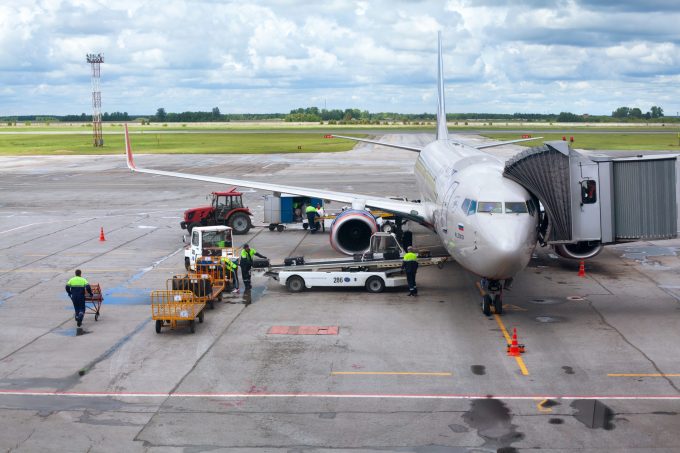
Ground handlers have warned that airport community systems risk adding complexity, rather than removing it.
Airport community systems can play a critical role in improving efficiency across the air cargo supply chain, but only if they are designed to remove bureaucracy rather than simply digitise it, delegates at TIACA’s Executive Summit in Warsaw heard this week.
During a panel discussion on “reinventing the playbook for a fragmented industry”, ground handling executives largely agreed that greater connectivity and data-sharing across stakeholders was essential. However, speakers voiced concerns that some community platforms were failing to address the underlying causes of inefficiency.
Kai Domscheit, MD of Frankfurt-based handler CHI Cargo Group, said he was a “strong supporter of a good cargo community system”, but warned the industry needed to be cautious about how such platforms were implemented.
“The cargo community system should not digitise bureaucracy, it should remove it,” he told delegates.
Mr Domscheit argued that some systems, particularly those handling truck slot management, risked masking operational shortcomings rather than solving them.
He claimed most handlers “misuse the slot management system to get away from liability that they have a labour scarcity issue”.
Using the example of warehouses with more truck docks than they have staff available to operate them, he suggested some systems failed to provide customers with a transparent view of the actual capacity, making it difficult to assess performance accurately.
He went further, criticising industry practices that could reward inefficiency.
“There’s a storage fee, so I’m actually making more money by not performing and delivering to my customer, and charging the freight forwarder,” he said. “And that’s why I’m speaking about this, because I really think it’s stupid, and they are committing fraud.
“Sorry to say that, but it’s not okay, not by my book.”
Swissport SVP cargo Steven Polmans offered a more positive assessment of community systems, but acknowledged that implementation remained a challenge.
“It does not come as a surprise that I’m a big fan of cargo community systems, but that does come with a few ‘buts’.
“If a few people are driving too fast on the highway, you do not abandon the rules. You try to change the behaviour. So, I don’t think the risk of people abusing a landslide management system should stop us from implementing it. If people abuse it, that’s a different discussion, and we should be dealing with it… I believe in a community system,” he said.
Mr Polmans argued that community systems added value when they provided a layer of connectivity between multiple stakeholders and systems that would otherwise remain disconnected.
“The community system should put an extra layer to bridge where there is a lack of collaboration, or where there are pain points that no single company can overcome,” he said.
However, he warned against airports creating standalone platforms that simply duplicate existing handling systems, and he questioned the motivation behind some airport-led initiatives.
“For me, a community system is part of basic infrastructure and should not be seen as a money-maker, be seen as dominating, or be collecting data for their own benefit. It should be for the community.”
Joanna Li, executive director of Hong Kong Air Cargo Terminals (Hactl), highlighted the benefits of community platforms in reducing paperwork and enabling digital communication between stakeholders, although she noted that integrating different systems could prove challenging.
The debate reflected a broader theme running throughout the summit: that fragmentation remains one of air cargo’s biggest challenges. While technology is often presented as the answer, panellists repeatedly stressed that true progress would depend on greater collaboration, transparency, and standardisation across the supply chain.
As Mr Domscheit put it: “Fragmentation, unfortunately, is the hidden tax of air cargo.”

For uninterrupted access, sign in or sign up to The Daily News, Premium or The Loadstar Enterprise Plan.
Comment on this article