Asia and Africa soak up new shipping capacity as US trades tread water
More than half of the new containership capacity added to global markets in the past ...



AMZN: AI WAVESDHL: THE FRENCH CONNECTIONJBHT: MIND THE SPREADMAERSK: GAUGE THE UPSIDE DSV: UP AND DOWNCHRW: FIRST OF ITS KINDMFT: TAKING PROFIT DSV: LAYOFFS IN THE USATSLA: ON THE MENDCHRW: 'SPECIAL AWARD' TIMECHRW: NEW HIGH-END TARGET ON THE STREETDHL: ABOUT JET FUEL SUPPLY
AMZN: AI WAVESDHL: THE FRENCH CONNECTIONJBHT: MIND THE SPREADMAERSK: GAUGE THE UPSIDE DSV: UP AND DOWNCHRW: FIRST OF ITS KINDMFT: TAKING PROFIT DSV: LAYOFFS IN THE USATSLA: ON THE MENDCHRW: 'SPECIAL AWARD' TIMECHRW: NEW HIGH-END TARGET ON THE STREETDHL: ABOUT JET FUEL SUPPLY
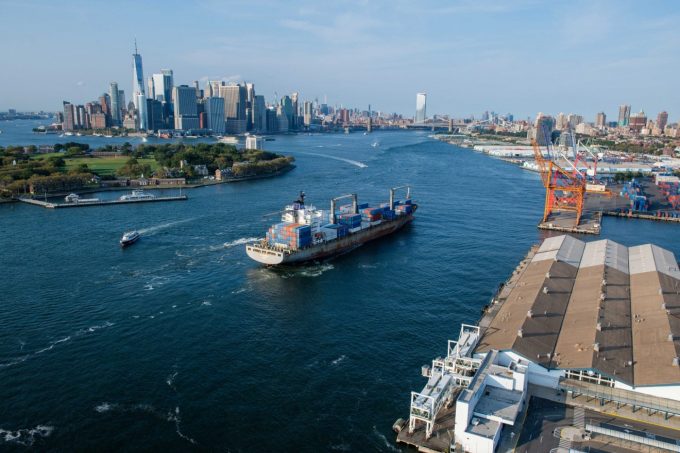
A combination of faltering demand, weak spot freight rates and a sharp injection of forecasted capacity has brough the transatlantic container trade to the point of collapse.
The news comes alongside a warning that carriers must act, today in The Loadstar, as they face overcapacity and depressed rates for years to come.
Spot rates on the headhaul westbound transatlantic trade have been weakening since the middle of September, according to Drewry’s World Container Index, with last week’s reading of $1,678 per 40ft on the Rotterdam-New York the lowest since February 2024.
Indeed, historically, the latest WCI transatlantic spot rate level is lower than at any point prior to the post-pandemic rate crash in 2023.
And according to new analysis by liner consultancy Sea-Intelligence, it could be set to get a lot worse if trade capacity on the route is deployed as forecasted.
“Apart from the short-term extreme low levels seen in late 2023, as the market succumbed to overcapacity in the post-pandemic demand correction, the current spot rate level is now lower than at any point in the measurable past.
“This clearly signal that the transatlantic head-haul has weakened commercially. The question is whether this can be reconciled with the supply-demand developments in the trade,” Sea-Intelligence writes.
Demand on the trade has ticked along this year, with 1.5% growth year-to-date, according to Container Trades Statistics’ (CTS) data, and actually dipped below last year’s levels in August.

Source: CTS
Meanwhile capacity, according to Sea-Intelligence calculations, is expected to increase to one of the highest levels ever seen on the trade – rising from its current level of around 160,000 teu per week to nearly 190,000 teu per week.

Source: Sea-Intelligence Consulting
Sea-Intelligence estimates that current vessel utilisation on the westbound transatlantic is around 60%, and warned that, depending on demand levels, will reduce further.

Source: Sea-Intelligence Consulting
It calculates that even with 5% demand growth, utilisation will fall to 50% and will go below that level if demand remains at its current level or reduces to zero.
On a purely mathematical basis, the models on the relationship between utlisation and spot rates mean that lower-than-50% utilisation would lead to negative freight rates, of up to just $500 per teu.
“Spot rates will obviously not go to the projected level of minus $1,000, as negative spot rates do not make sense. But the model tells us that we are entering territory where utilisation is so weak that the model will likely cease to work and bottom-out before rates become negative.
“But, most importantly, the situation is poised to become so dire, that the realistic development is to see carriers withdraw capacity from the trade in order to create a better balance.
“This impending crash is, therefore, a clear indication to shippers that they should prepare themselves to see planned vessel departures in the coming months not all going to happen,” the analyst writes.
Get up to speed on all things supply chain!

For uninterrupted access, sign in or sign up to The Daily News, Premium or The Loadstar Enterprise Plan.
Comment on this article