Kuehne + Nagel strengthens own-controlled air freight network
PRESS RELEASE Kuehne+Nagel strengthens own-controlled air freight network with greater global connectivity Schindellegi, CH, 08 June ...


DHL: DATE CENTRE PUSH IN APACMAERSK: HAVE A LOOKTSLA: TAILWINDS FDX: PAYOUT ADJUSTMENT UPDATEKNIN: AIR FREIGHT NETWORK EXPANSIONMAERSK: NEARING ONE-YEAR HIGHFDX: FEDEX FREIGHT UPSIDEBA: TIME TO DELIVERFDX: EARNINGS RISKDSV: UPSIDEKNX: TIME TO SAY GOODBYEODFL: SET THE BAR HIGHBA: PIPELINE
DHL: DATE CENTRE PUSH IN APACMAERSK: HAVE A LOOKTSLA: TAILWINDS FDX: PAYOUT ADJUSTMENT UPDATEKNIN: AIR FREIGHT NETWORK EXPANSIONMAERSK: NEARING ONE-YEAR HIGHFDX: FEDEX FREIGHT UPSIDEBA: TIME TO DELIVERFDX: EARNINGS RISKDSV: UPSIDEKNX: TIME TO SAY GOODBYEODFL: SET THE BAR HIGHBA: PIPELINE
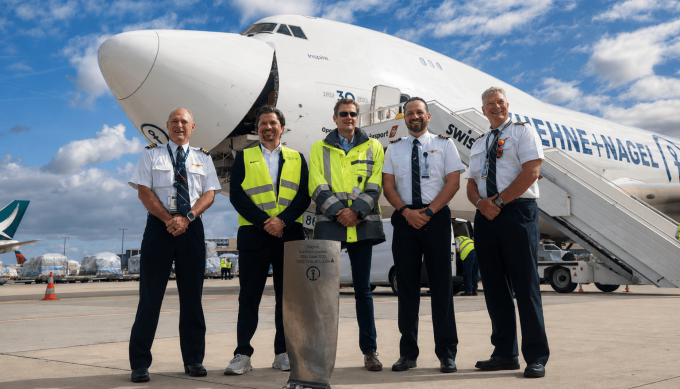
Kuehne+Nagel (K+N) is eyeing greater connectivity with Europe via Frankfurt, while Central Europe’s air cargo sector is increasingly focused on capturing volumes that continue to favour Western European gateways.
The freight forwarding giant has announced the expansion of its air freight network by adding Frankfurt to the rotation of its B747-8 freighter between North America, Europe, and Asia.
The move introduces a weekly Chicago–Frankfurt–Atlanta link between two major pharmaceutical manufacturing and distribution hubs, enhancing support for time-sensitive healthcare shipments, it said.
Operated by Atlas Air under a long-term charter agreement, its freighter, named Inspire, offers around 140 tonnes of capacity on the updated rotation connecting Atlanta, Chicago, Frankfurt, Liège, Sharjah, and Taipei.
Martin Schaefer, SVP air logistics Germany at K+N, said Frankfurt’s position as a leading European cargo and pharma hub would provide customers with “greater capacity, reliability and global connectivity”.
K+N said the expansion formed part of its wider strategy to grow its own-controlled air freight network, which now comprises more than 100 weekly charter connections worldwide.
Meanwhile, during TIACA’s Executive Summit last week, a panel discussion on the future of Central European air cargo argued that the region’s strong economic growth, manufacturing base, and rising consumer demand should enable local airports to retain a greater share of cargo currently routed through major hubs, such as Frankfurt.
Michał Grochowski, cargo director at LOT Cargo, said locally contracted export volumes remained resilient despite broader trade headwinds, suggesting some traditional Western European gateways were already beginning to lose traffic.
“Export is still on the same level, it means that foreign hubs are losing freight coming from this front,” he said, while identifying ecommerce as the principal driver of recent growth.
However, Mr Grochowski warned that structural barriers continued to limit the region’s ability to attract additional freighter services. He argued that Central Europe needed more “secure supply chains”, in the form of recognised shippers and improved access to main-deck cargo before dedicated freighter operations could be economically sustainable.
At the same time, airports across the region were positioning themselves to capture future growth, setting up an increasingly competitive landscape, delegates heard.
Budapest Airport, which handled 426,000 tonnes of freight last year, remains the largest cargo gateway in Central and Eastern Europe and has expanded rapidly through investments in infrastructure and liberal traffic rights policies. The airport’s cargo director, József Kossuth, argued that investment, rather than geography alone, was determining which airports were winning market share.
“If you look at the recent developments, look who grew the most in Europe, even in the world – those that invested in capacities,” he said, citing Budapest, Liège, Milan, and Madrid.
Competition is set to intensify further with Poland’s Central Communication Port (CPK) project, scheduled to open in the early 2030s. Designed as a multimodal logistics hub, the airport will include dedicated cargo facilities, rail connections, road access, and streamlined customs processes.
While some observers see CPK as a future rival to existing gateways, Mr Kossuth suggested growth prospects were large enough to support multiple hubs.
“I don’t see Katowice as a competitor,” he said. “There’s a very good place for new capacity.”
The panel’s overall message was that Central Europe has the economic fundamentals to become a far larger player in global air cargo, but urged that ensuring infrastructure, regulation, and airline networks evolved quickly enough to prevent more of the region’s freight from continuing its journey via Western Europe would be key.
Watch the latest episode of The Loadstar’s News in Brief Podcast on YouTube and subscribe so you never miss an episode!
For uninterrupted access, sign in or sign up to The Daily News, Premium or The Loadstar Enterprise Plan.

Comment on this article