News in Brief | Week 23 2026 | Carrier's rate run and TIACA Exec Summit
In this episode of The Loadstar Podcast News in Brief, we bring you the latest ...


DHL: DATE CENTRE PUSH IN APACMAERSK: HAVE A LOOKTSLA: TAILWINDS FDX: PAYOUT ADJUSTMENT UPDATEKNIN: AIR FREIGHT NETWORK EXPANSIONMAERSK: NEARING ONE-YEAR HIGHFDX: FEDEX FREIGHT UPSIDEBA: TIME TO DELIVERFDX: EARNINGS RISKDSV: UPSIDEKNX: TIME TO SAY GOODBYEODFL: SET THE BAR HIGHBA: PIPELINE
DHL: DATE CENTRE PUSH IN APACMAERSK: HAVE A LOOKTSLA: TAILWINDS FDX: PAYOUT ADJUSTMENT UPDATEKNIN: AIR FREIGHT NETWORK EXPANSIONMAERSK: NEARING ONE-YEAR HIGHFDX: FEDEX FREIGHT UPSIDEBA: TIME TO DELIVERFDX: EARNINGS RISKDSV: UPSIDEKNX: TIME TO SAY GOODBYEODFL: SET THE BAR HIGHBA: PIPELINE
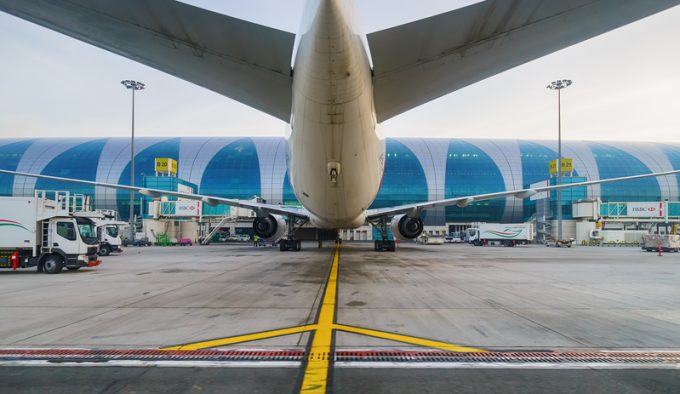
Air cargo networks are tightening as airlines suspend Middle East services, refuse cargo bookings, and grapple with sharply rising fuel costs, following the escalation of conflict in the region.
Freighter operators are already restricting flows: Luxembourg-based Cargolux said it had temporarily suspended acceptance of all freight bound for the Middle East until further notice, with the exception of Muscat.
Air France-KLM Martinair Cargo has also halted services to several destinations in the region. In an operational update yesterday, the carrier said flights had been suspended to Dubai, Riyadh, Beirut, and Tel Aviv for Air France, and to Dubai, Riyadh, Dammam, and Tel Aviv for KLM. Martinair freighter services to Dubai World Central and Cairo have also been suspended.
As a result, the group said, no cargo bookings could be accepted for those destinations and it asked forwarders not to deliver freight bound for affected stations to its warehouses until further notice.
Cathay Pacific has, likewise, suspended passenger and cargo services to parts of the Middle East. The airline said its daily passenger flights to Dubai and Riyadh, along with Cathay Cargo freighter flights to the two cities, would remain cancelled until at least 31 March because of the “volatile situation” in the region.
Meanwhile, Gulf Air has reportedly temporarily relocated several aircraft from Bahrain International Airport. This morning, Reuters reported that a rising column of smoke was seen near Bahrain’s airport. Flight tracking site Flightradar24 reported on social media that 21 planes had been “evacuated”: 11 Gulf Air jets, one Air India Express plane and nine freighters from other airlines, seven of which are thought to be DHL’s. As the Bahrain News Agency clarified, the relocation of the aircraft is part of Gulf Air’s “operational planning” and is aimed at ensuring “sustainable operations and improving the route network for customers.”
At the same time, airlines are beginning to pass the rising fuel costs on to customers. Cathay Pacific announced today a sharp increase in fuel surcharges from 18 March, after jet fuel prices “approximately doubled” amid “the latest developments in the Middle East”.
Short-haul fuel surcharges will rise to about $37 (HK$290) from $18, medium-haul to about $69 (HK$541) from $34, and long-haul to about $149 (HK$1,164) from $73.
Data from the IATA Jet Fuel Monitor shows the global benchmark jumping 58.4% week on week, to $157.41 per barrel for the week ending 6 March.

Source: IATA Jet Fuel Monitor
Meanwhile, Gulf carriers are also operating under heavy restrictions as airspace closures across the region continue to disrupt operations.
Qatar Airways said scheduled flights remain temporarily suspended following the closure of Qatari airspace, although the airline has begun operating a limited number of services through temporary corridors authorised by the Qatar Civil Aviation Authority.
The disruption is particularly significant given the central role Gulf hubs play in global air cargo networks, acting as major transit points linking Asian manufacturing centres with markets in Europe and North America.
Industry observers say the crisis is also pushing up war-risk insurance premiums for aircraft operating in or near the region, as insurers reassess the exposure to missile strikes, drone attacks, and wider military activity.
With longer routings around closed airspace and rising jet fuel prices, the higher insurance costs add further pressure to airline operating costs, even as carriers attempt to keep cargo moving where possible.

For uninterrupted access, sign in or sign up to The Daily News, Premium or The Loadstar Enterprise Plan.

Comment on this article
Sadik Tole
March 13, 2026 at 4:47 amVery informative