India-Gulf container rates plunge as capacity returns and cargo backlogs ease
Container shipping rates from India to the Persian Gulf have significantly softened from the peaks ...


DHL: DATE CENTRE PUSH IN APACMAERSK: HAVE A LOOKTSLA: TAILWINDS FDX: PAYOUT ADJUSTMENT UPDATEKNIN: AIR FREIGHT NETWORK EXPANSIONMAERSK: NEARING ONE-YEAR HIGHFDX: FEDEX FREIGHT UPSIDEBA: TIME TO DELIVERFDX: EARNINGS RISKDSV: UPSIDEKNX: TIME TO SAY GOODBYEODFL: SET THE BAR HIGHBA: PIPELINE
DHL: DATE CENTRE PUSH IN APACMAERSK: HAVE A LOOKTSLA: TAILWINDS FDX: PAYOUT ADJUSTMENT UPDATEKNIN: AIR FREIGHT NETWORK EXPANSIONMAERSK: NEARING ONE-YEAR HIGHFDX: FEDEX FREIGHT UPSIDEBA: TIME TO DELIVERFDX: EARNINGS RISKDSV: UPSIDEKNX: TIME TO SAY GOODBYEODFL: SET THE BAR HIGHBA: PIPELINE
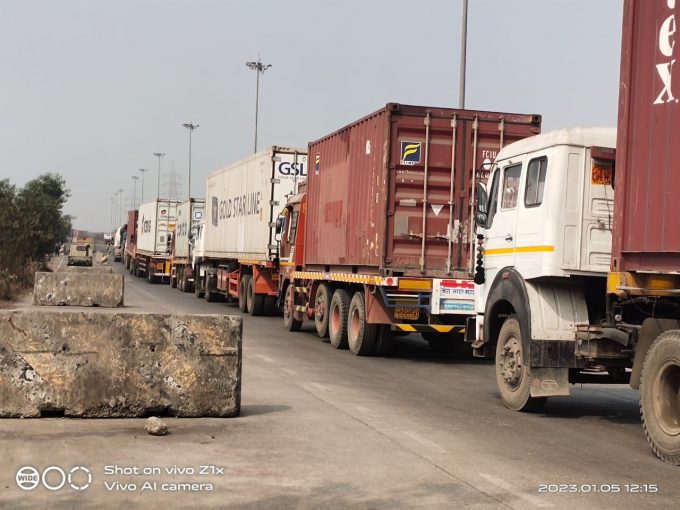
Hauliers at India’s Nhava Sheva Port (JNPA) are complaining about lengthening vehicle queues outside the facility operated by APMT known as Gateway Terminals India (GTI).
According to vehicle owners/operators affiliated with the Nhava Sheva Container Operators’ Welfare Association (NSCOWA), drivers have been facing significantly long turn-time delays, impacting their business.
“It is taking approximately 25–30 hours for a vehicle to reach the GTI main gate,” NSCOWA complained to JNPA last week, seeking port-level intervention and immediate relief.
“Vehicles that have completed customs clearance have been stuck in the out-gate queue for the last 3–4 days, indicating operational bottlenecks.”
NSCOWA also reported tightening availability of drivers in the harbour, due to the logjam, which it blamed on a new slot allotment system introduced by the terminal.
“We request the GTI administration to temporarily suspend the new slot/location allocation system and revert to the earlier process until traffic flow normalises,” said the trucker group.
GTI has seen a steady volume buildup in recent months, logging record monthly throughput in January, handling some 212,000 teu, up 14.5% year on year.
But the terminal claimed the growth had been aided by its stronger focus on operational efficiency.
“The milestone underscores the terminal’s ability to deliver enhanced operational performance, directly translating into improved service levels for customers,” said APMT. “For customers, this effectiveness results in shorter vessel turnaround times, increased schedule reliability, and consistent service quality.”
For the first 10 months of fiscal year 2025-26 (April-January), GTI’s volume rose to 1.9m teu, from 1.7m teu, according to new data.
While high terminal productivity is a “holy grail” for competitive vessel operators, local trade sources also believe rising volumes through GTI could be rooted in some sort of commercial advantages that carriers have identified at the terminal due to its lower tariff rates, mainly vessel-related charges, compared with competitors in the port complex, including PSA International-operated BMCT and DP World Nhava Sheva.
The recent launch of Phase 2 operations by PSA Mumbai that doubled its capacity to 4.8m teu annually, there has been a meteoric rise in JNPA throughput: from a monthly average of some 600,000 teu through fiscal 2024-25, to more than 700,000 teu in the past few months, data indicates.
Sources believe the port has been able to claw back some of the volumes lost to nearby Adani Group-operated Mundra Port in the past for capacity and productivity reasons.
“As container volumes through Indian ports continue to increase, the terminal’s improved capacity and efficiency offer shipping lines and cargo owners a dependable gateway infrastructure essential for supply chain performance,” GTI added.
Major Indian gateway ports usually see a spike in freight volumes in the weeks leading to the national fiscal year closing on 31 March.
For uninterrupted access, sign in or sign up to The Daily News, Premium or The Loadstar Enterprise Plan.

Comment on this article